Systems Thinking: Twelve Leverage Points to Intervene in a System
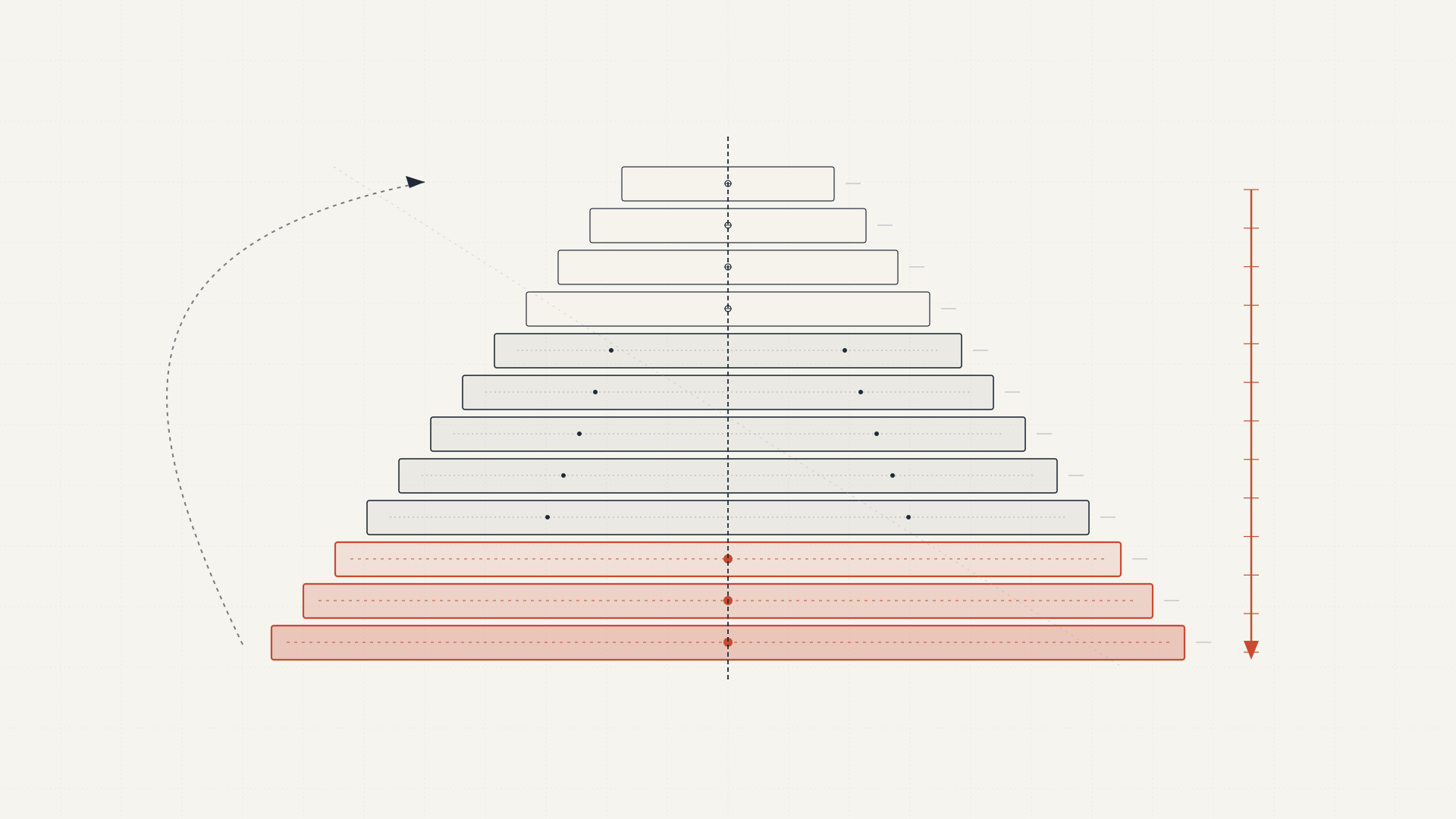
Facing the Same Problem, Different Points of Intervention Emerge
Consider a company facing an unrelenting backlog of customer support inquiries.
Staff work tirelessly all day, yet the queue never shrinks. The company hires more personnel. For a fleeting moment things improve, only for the backlog to surge again.
Management then raises the daily quota for resolved tickets per employee. Processing volume rises, but customer complaints about long delays persist.
What was missed?
To understand why, one must examine how inquiries accumulate. If daily incoming volume exceeds actual resolutions, the remainder rolls over to the next day. Even if staff process more tickets than yesterday, the queue grows longer whenever incoming inquiries outpace them.
Here, another question emerges: do incoming inquiries consist solely of first-time contacts?
Many may be customers whose issues were never resolved by previous replies. Quickly sending out answers and actually solving a customer’s problem are entirely different things. If rushing out replies causes the same inquiries to rebound, striving to raise sheer closure volume cannot drain the queue.
To change an outcome, one must understand the circular chain that produces it.
1. First, Map How the Work Actually Flows
We can illustrate the company’s situation simply:
Loading diagram.
View diagram source
flowchart LR
    A["New and repeat inquiries arrive"] --> B["Unresolved inquiry backlog accumulates"]
    B --> C["Staff work to resolve issues"]
    C --> D["Resolved inquiries exit"]
    C --> E["Unresolved issues prompt customers to call back"]
    E --> A
We can give three names to this dynamic. The accumulated backlog of unresolved tickets is a stock—the current inventory of state. Inquiries arriving or exiting represent flows.
When customers who received unhelpful replies call back, causing the queue to build further, that connection is a feedback loop. An action taken earlier cycles around to influence subsequent conditions.
How people work directly influences these flows. If the company rewards rapid replies, staff have every reason to prioritize speed over thoroughness. If genuine resolution is verified, choices shift.
Above this lies what the organization truly aims to accomplish:
What is considered good service?
                ↓
What serves as the metric for success?
                ↓
Which behaviors are rewarded?
                ↓
How do employees actually work?
                ↓
How many inquiries arrive, and how many are resolved?
Ways to reduce the backlog can be found across this map: adding staff, routing information better, revising evaluation criteria, or redefining success itself.
Key Takeaway: There are varying depths of leverage when intervening in a system. You can tweak numbers within an existing framework, or rewrite the rules governing behavior. Go deeper, and you confront the goals and paradigms that those rules serve.
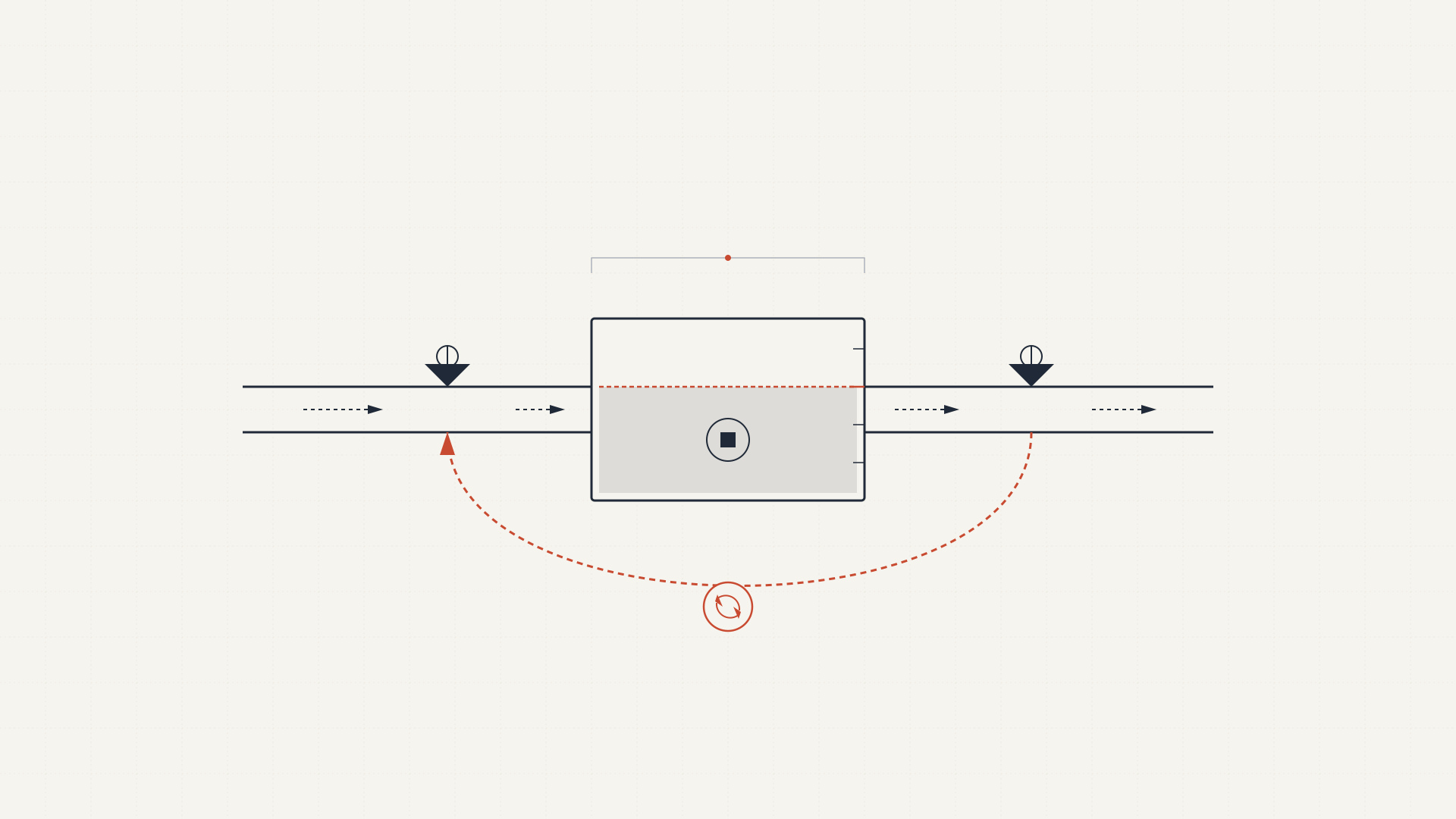
2. Meadows’ Twelve Leverage Points
Donella Meadows categorized system interventions into twelve degrees of leverage.
Moving from 12 down to 1 represents an increasing potential for transformative change. However, this is not an absolute hierarchy of effectiveness in every context; Meadows herself described it as a tentative ordering with exceptions. “Leverage Points”
The table below summarizes each point in plain language, using the support case as a concrete example.
Rank | Plain Explanation | Original Concept | What Can an Organization Change? |
|---|---|---|---|
12 | Change the numbers | Constants & parameters | Raise the daily target from 20 to 25 resolved tickets. |
11 | Maintain buffers | Buffers | Keep reserve staff and time to absorb unexpected inquiry spikes. |
10 | Change physical routing | Structure of material stocks & flows | Relocate return hubs so goods do not take unnecessary detours. |
9 | Mind the time between cause and effect | Delays | Do not judge hiring effectiveness before new staff are fully trained. |
8 | Strengthen corrective forces | Negative feedback loops | Deploy backup staff automatically when the queue crosses a threshold. |
7 | Dampen self-amplifying spirals | Positive feedback loops | Reduce hurried responses that trigger repeat tickets and worsen backlogs. |
6 | Deliver info to those who need it | Information flows | Inform initial handlers whenever a customer contacts support again. |
5 | Change governing rules | Rules | Evaluate genuine resolution rather than just speed of ticket closure. |
4 | Enable frontline adaptation | Self-organization | Allow employees to test and refine procedures when recurring issues arise. |
3 | Change what you aim to achieve | Goals | Aim for complete resolution of problems instead of sheer ticket volume. |
2 | Reexamine unquestioned assumptions | Paradigm | Question the assumption that customer support is merely an expense. |
1 | Stay open to revising the new lens | Transcending paradigms | Reevaluate whenever new paradigms also reveal limitations. |
Let us examine these points in groups.
3. What Numbers, Buffers, and Time Actually Change
Point 12 is the most familiar. We increase budgets, raise quotas, or adjust pricing. It alters values within a fixed operating framework.
Point 11 is about buffers. When a daily schedule is packed to capacity, minor shocks cause cascading delays. Having a buffer absorbs unexpected surges, though maintaining it incurs cost.
Point 10 is physical arrangement. If return merchandise must travel through a distant warehouse, demanding faster work will not shorten transit distance. Rerouting physical infrastructure is an entirely different intervention than raising processing quotas.
Point 9 addresses time delays. Hiring a new employee does not yield an experienced worker on day one. If management concludes training is ineffective and reshuffles the team prematurely, it becomes impossible to see what the original decision accomplished.
Even these four items show that a blanket call to “work faster” conflates distinct issues: whether quotas are low, buffers are absent, physical routing is inefficient, or time is needed for effects to unfold.
4. Loops That Settle vs. Loops That Spiral
Points 8 and 7 often sound technical, but “negative” and “positive” do not mean bad and good.
Negative feedback dampens change and restores balance. When backlogs build, bringing in temporary support to clear them acts as a stabilizing force. However, if inquiries rise by a thousand while support can only clear ten, corrective capacity remains inadequate. This is why Meadows emphasized relative strength.
Positive feedback amplifies change into a spiral. Backlogs induce rushed answers; rushed answers provoke repeat contacts; repeat contacts deepen the backlog.
Adding support staff versus eliminating the root causes of repeat tickets are fundamentally different strategies. One adds power to drain accumulated work; the other weakens the spiral generating it.
A similar question applies to traffic. Expanding highway lanes accommodates more vehicles, but improved driving conditions can also induce more driving.
Duranton and Turner’s study of US metropolitan areas found vehicle-kilometers traveled increased in direct proportion to lane capacity expansions. Physical changes must be evaluated alongside behavioral responses, though this does not negate all road improvements. Research Reference
5. Changing Information and Rules Alters Choices
Point 6 asks who receives what information.
If an employee never learns whether a customer’s problem was resolved, they lack the feedback necessary to improve. Feeding repeat-contact data back to the original handler creates a self-correcting dynamic that did not previously exist.
Yet information does not always produce predicted behavior.
In Schultz and colleagues’ energy consumption experiments, informing households of neighbor averages caused high consumers to cut back, but prompted low consumers to increase usage. Adding an explicit approval signal eliminated that boomerang effect. The same information worked differently depending on recipient context. Research Abstract
Point 5 focuses on rules. Solving complex issues thoroughly takes time. If management exclusively rewards rapid ticket closure, staff face contradictory incentives. Leadership must check whether stated intentions align with actual incentives.
Point 4 goes further: rather than waiting for management to devise every rule, empower frontline staff to adapt how work gets done.
Problems continuously evolve. An organization that must await executive directives responds very differently from one capable of testing and revising workflows on the ground.
6. Ultimately, We Confront Goals and Assumptions
Point 3 is the system’s goal.
If the goal is maximizing closed tickets, employees find ways to finish calls quickly. If the goal is genuinely resolving customer problems, staff begin investigating why issues repeat and how to prevent them entirely.
When the goal changes, the definition of success changes with it.
Point 2 asks why that goal felt natural in the first place.
If customer support is viewed purely as a cost center, management focuses on minimizing headcount. If support is viewed as an early warning system for product flaws, routing insights to product teams becomes vital.
The paradigm, in Meadows’ framing, is the unspoken mental model underlying all goals and rules.
Point 1 is the capacity to hold even newly chosen paradigms lightly. Overemphasizing customer experience while ignoring operational costs produces new vulnerabilities. True mastery lies in recognizing what your current lens clarifies and what it obscures.
7. Choose Where to Intervene Based on the Real Problem
You do not need to leap straight to Point 1.
In an acute crisis, bringing in extra staff may be essential. Concurrently, you can investigate repeat drivers and prepare longer-term rule changes. Immediate measures and deep interventions frequently belong together.
The value of this framework lies in recognizing when you are stuck repeating the same shallow response.
If you keep raising quotas, you are lingering at Point 12. If data is hoarded rather than shared with handlers, investigate Point 6. If rule tweaks fail, reexamine the core goal at Point 3.
Return to the support team:
Hiring more staff may be reasonable. But alongside that decision, ask: Why do customers call back? Does the initial handler know? What behavior does leadership truly celebrate?
The twelve leverage points widen our menu of options beyond familiar surface tweaks.
Practical Principles for the Field:
1. Map the recurring feedback loops first: Look beyond surface symptoms and visualize the causal structure where causes and effects reinforce each other.
2. Check the depth of your intervention on the 12-point map: If you are solely adjusting quotas or headcount, you are stuck at superficial Point 12. Prioritize information flows (Point 6) and rules (Point 5).
3. Allow for systemic delays before judging outcomes: Give structural interventions adequate time to materialize, and actively monitor for unintended rebound effects.
Further Questions
All Essays
Why does linking bonuses to metrics erode craft and collaboration? Exploring Goodhart's Law, the Holmstrom-Milgrom multitask model, and Edward Lazear's Safelite evidence to map when performance pay succeeds versus when it destroys institutions.
Why do visionary executive directives morph into unintended behaviors? Exploring Graham Allison's three decision-making models: Rational Actor, Organizational Process (SOP), and Bureaucratic Politics.