Allison's Decision Models: Why Flawless Strategy Distorts in Organizations
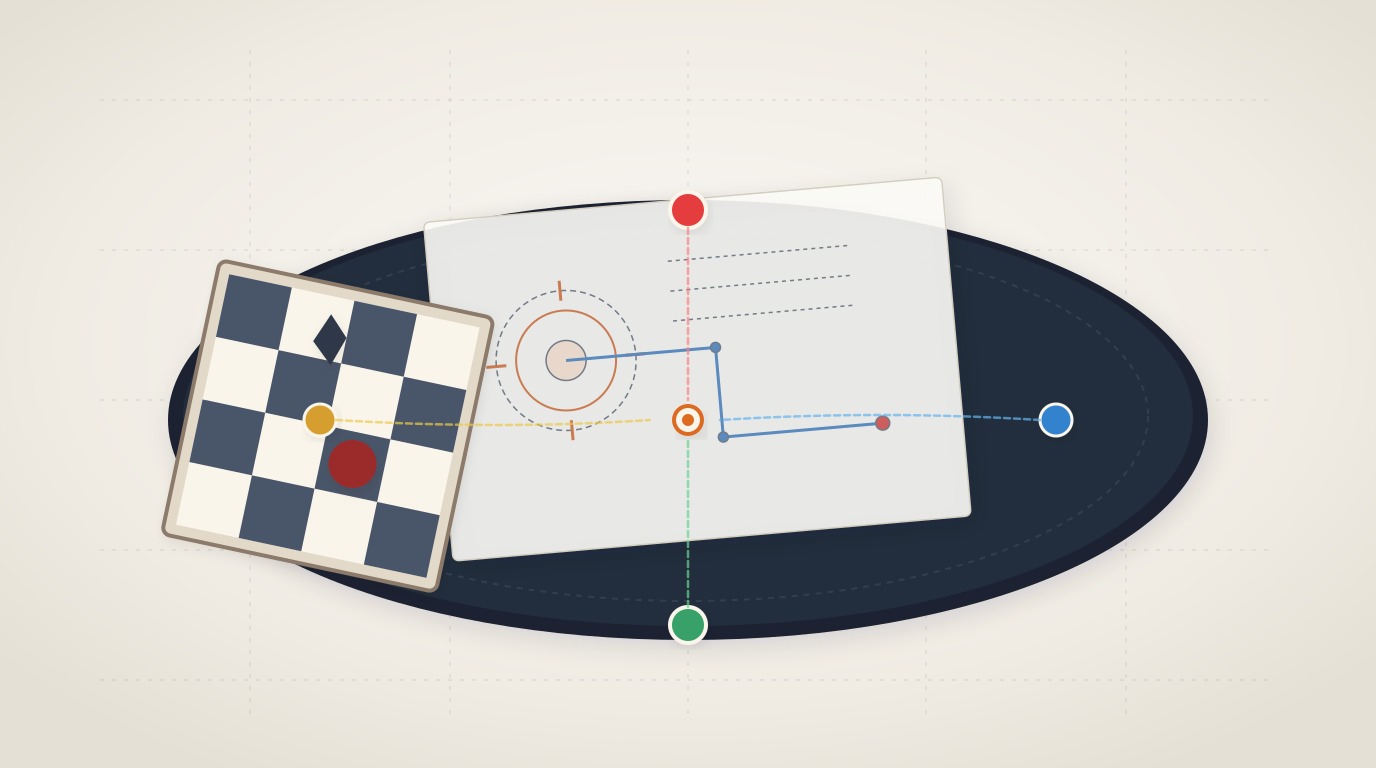
1. Why Executive Directives Mutate on the Front Lines
When an ambitious corporate initiative fails, observers reflexively blame a single leader. Critics allege that executive vision was deficient or that strategic execution was clumsy. Conversely, when an enterprise triumphs, commentators laud the chief executive’s singular foresight and calculated brilliance.
Underlying this instinct lies a pervasive assumption: the organization viewed as a solitary human actor with a unified brain and limbs. In this narrative, a leader perched at the summit calculates objectives with geometric clarity, and thousands of subordinates march in lockstep to realize that vision.
Yet anyone who has operated within complex institutions knows that reality behaves differently.
No matter how grand an executive directive sounds at headquarters, once it descends into operating divisions, it becomes trapped within preexisting approval workflows and legacy standard operating procedures (SOPs). Furthermore, while cabinet members or vice presidents profess loyalty to corporate objectives, each shoulders divergent departmental risks, yielding compromises that no single participant entirely endorsed.
When we claim to understand why an institution acted, what are we genuinely observing?
Key Takeaway: An organizational decision is never the immaculate output of an isolated intellect. It is the composite artifact of a three-tier filter: bounded by the physical routines of standard operating procedures (SOPs), and forged through political bargaining among key stakeholders defending competing departmental risks.
Analyzing the 1962 Cuban Missile Crisis, political scientist Graham Allison demonstrated that evaluating an institutional choice requires three distinct analytical lenses to dismantle the illusion of unitary rationality.
Loading diagram.
View diagram source
flowchart TD
  A["Strategic Objectives (Model I: Rational Actor)"] --> B{"Operational Feasibility (Model II: SOP Filter)"}
  B -->|Unexecutable Options Eliminated| C{"Departmental Bargaining (Model III: Political Filter)"}
  C -->|Winning Coalition Formed| D["Actual Institutional Action (Compromised Reality)"]
2. Model I: The Rational Actor Illusion — "Plausible Aftermath Is Not Initial Design"
The first lens is the classical Rational Actor Model, the framework most intuitive to observers.
Through this prism, the government functions like an expert chess player. When Soviet ballistic missiles were discovered in Cuba, Washington methodically weighed competing alternatives:
1) Doing nothing: Unacceptable, as American regional security was directly compromised.
2) Full invasion and preemptive assault: Rejected due to catastrophic risks of triggering global nuclear conflict.
3) Purely diplomatic demarches: Dismissed because it allowed missiles to achieve operational readiness.
4) Naval blockade (quarantine): Selected as the optimal lever that exerted intense pressure while offering Moscow temporal margin to reconsider without immediate bloodshed.
This textbook explanation links goals, alternatives, and anticipated outcomes with compelling elegance.
Yet Allison cautioned against backward projection. Discovering a coherent strategic justification after the fact does not prove that the action was produced solely through calculated optimization. Model I often constructs a polished narrative that masks the mechanical friction underneath.
3. Model II: Organizational Process — "Desire Versus Prepared Capability"
Applying the Organizational Process Model forces high strategy to confront the physical realities of institutional routines.
President John F. Kennedy and his inner circle initially favored a surgical strike: destroying missile launch pads with surgical precision while sparing airfields and civilian populations to prevent Soviet escalation.
However, the Air Force staff presented an operational plan demanding massive bombardment across all Cuban air bases and defense networks, involving hundreds of sorties.
This discrepancy did not stem from insubordination. The military apparatus possessed standard operating procedures designed exclusively for large-scale pre-war air supremacy. A tailored, pinpoint strike did not exist in their codified operational manuals. They could only execute what they had systematically trained and resourced.
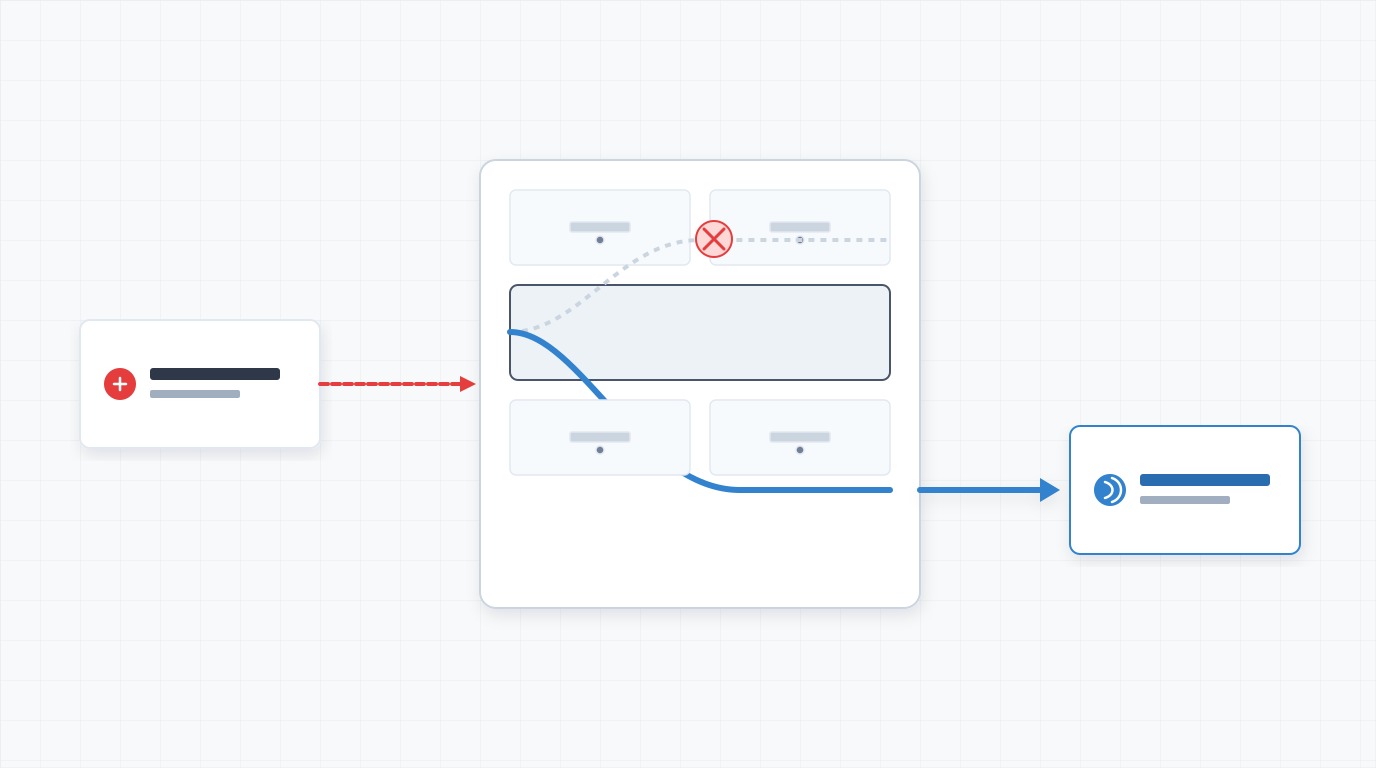
Regardless of leadership intent, if an option is not already codified into an operational manual and logistical pipeline, it cannot serve as an actionable alternative in an acute crisis.
Friction persisted during execution. When Kennedy ordered the naval quarantine line moved outward to 500 miles to allow Khrushchev room to de-escalate, naval commanders adhered to standard engagement protocols closer to the coastline to safeguard ships against submarine ambushes.
Orders are merely rhetoric; actual institutional behavior reflects ingrained procedural routines.
4. Model III: Bureaucratic Politics — "Coalitions Prevail Over Abstract Truths"
The third lens examines Bureaucratic Politics, where decisions emerge from bargaining among institutional actors with fragmented power.
Participants around the decision table are not dispassionate mathematicians. They are stewards of distinct departmental responsibilities. As Miles’s Law famously observes:
"Where you stand depends on where you sit."
Military commanders prioritized preventing operational missiles from striking American territory. Secretary of Defense Robert McNamara focused on eliminating the probability of accidental nuclear escalation. Attorney General Robert Kennedy viewed unannounced bombardment as a moral catastrophe akin to Pearl Harbor.
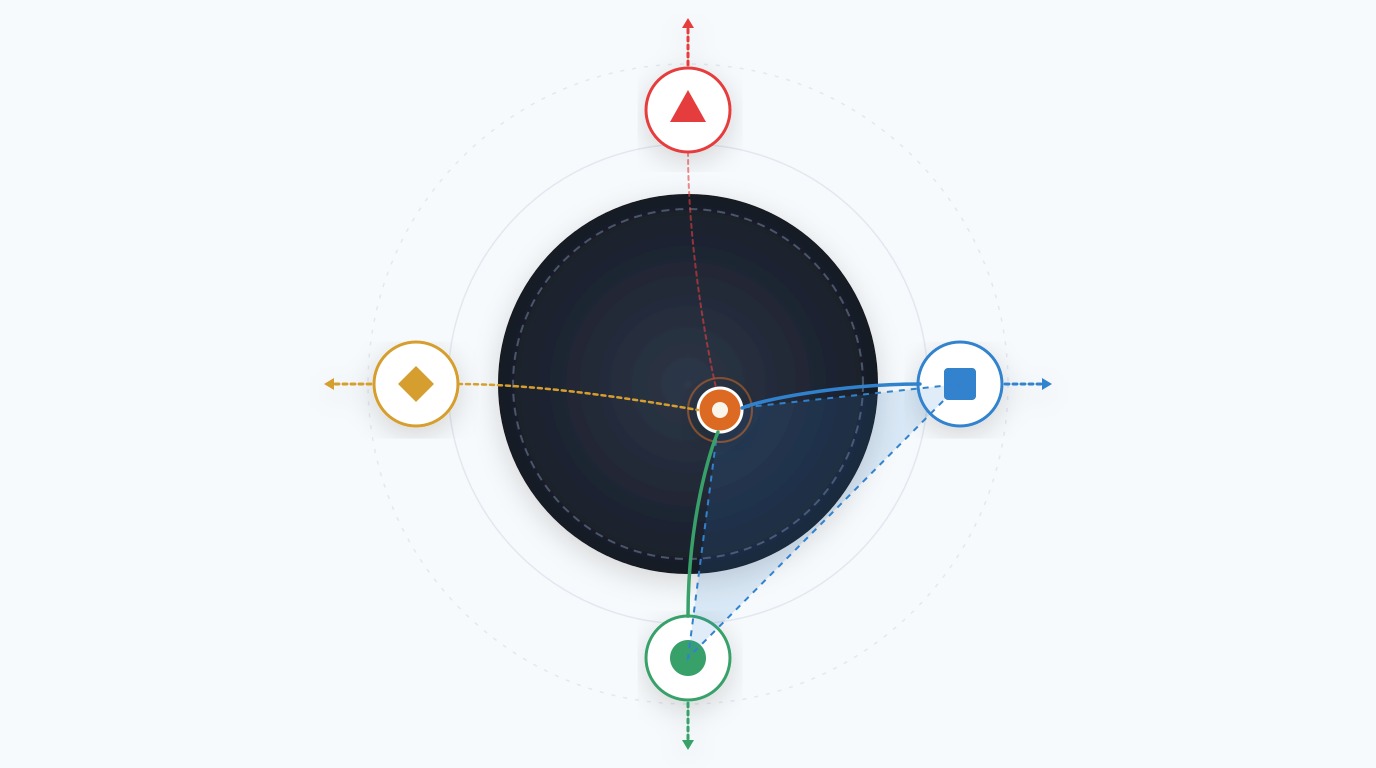
Each participant acted with deep patriotism, yet each defended a divergent hierarchy of existential catastrophe.
The naval blockade ultimately triumphed not because it represented an uncontested mathematical optimum, but because McNamara and Robert Kennedy forged a cohesive political coalition that leveraged the president’s personal trust to counter military demands.
Organizational decisions represent dynamic political equilibria shaped by relative credibility and internal alliances.
5. Comparative Analysis of Allison’s Three Models
The three conceptual lenses contrast across five structural dimensions:
Analytical Dimension | Model I: Rational Actor | Model II: Organizational Process | Model III: Bureaucratic Politics |
|---|---|---|---|
Organizational View | Unitary actor with single mind | Constellation of allied sub-units with SOPs | Arena of players with competing agendas |
Decision Authority | Chief Executive / Sovereign Head | Operational divisions executing routines | Bargaining coalition of key cabinet leaders |
Causal Determinant | Calculated trade-off of costs and benefits | Preexisting operational procedures (SOP) | Negotiation, persuasion, and political clout |
Cuban Crisis Insight | Blockade maximized leverage while averting war | Lack of surgical strike SOP forced blockade choice | McNamara-RFK alliance persuaded the President |
Corporate Analogy | "We entered the market to optimize margins" | "Release was delayed due to legacy review workflows" | "Product and Sales struck a mid-tier compromise" |
6. The Essence of Leadership: System Architect, Not Isolated Chess Master
Allison’s conceptual framework provides an unambiguous verdict for leadership.
Effective leaders do not operate as solitary chess prodigies devising strategies in isolation.
Instead, they act as organizational gardeners: ensuring that executive strategy (Model I) is supported by modernized operational pipelines (Model II), and moderating competing departmental anxieties (Model III) to build resilient coalitions that translate strategic intent into coherent action.
True institutional mastery requires tracking which standard procedures an order traversed, and which internal alliances secured its passage.
Field-Tested Decision Criteria:
1. Never confuse retrospective narrative with initial design: A favorable outcome does not validate that initial planning was unitarily rational. Organizations intoxicated by hindsight bias overlook structural friction and court disaster in subsequent crises.
2. Audit operating routines before declaring strategy: Visionary blueprints without codified field procedures in operational cabinets remain empty aspirations. An option that cannot be executed does not exist.
3. Interpret opposition through departmental responsibility: Dissent rarely indicates malicious resistance. Uncover the specific organizational risks visible exclusively from your counterpart’s institutional seat.
4. Build internal coalitions with the same rigor as strategy: Merit alone will not carry a directive across institutional hurdles. Anchor cross-functional alliances that absorb legitimate departmental fears.
5. Cross-verify physical resource flows against official rhetoric: Words spoken in boardrooms often reflect political positioning. Inspect budgets, logistics, and deployment lines to verify the true institutional vector.
Further Questions
All Essays
Why do organizations exhaust themselves tweaking parameters when problems recur? Exploring Donella Meadows’ systems thinking and 12 leverage points—from feedback loops and system rules to goals and paradigms.
Why software engineering grows more rigorous as AI and natural language replace coding. Examining the ladder of abstraction, the evaporation of accidental complexity, and the engineer as system risk underwriter.