The Silence of Crowds Does Not Imply Consent: Threshold Models and the Dynamics of Collective Behavior
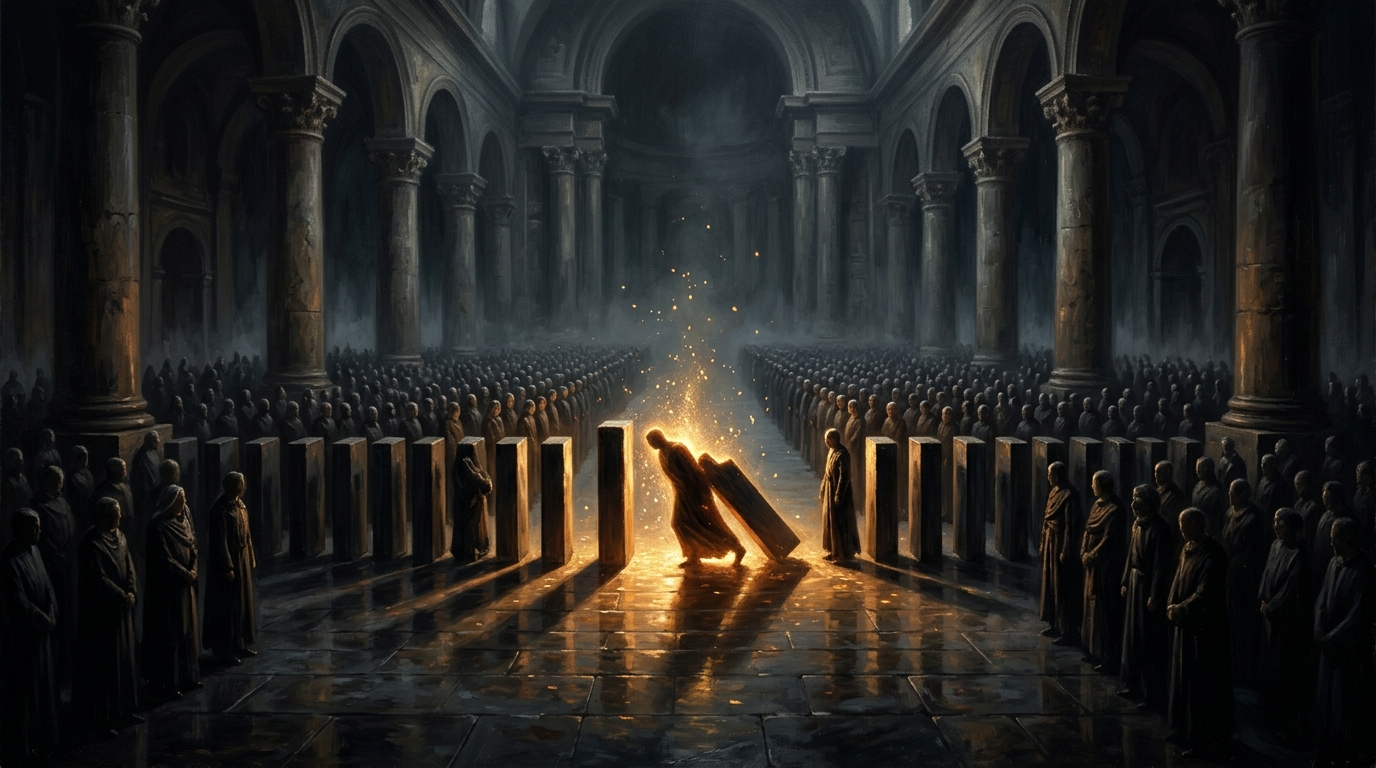
1. The Optical Illusion of an Uncontested Room
When a contentious new initiative is announced in the executive boardroom, not a single hand goes up. Even when direct questions invite dissenting feedback, only heavy silence follows.
Leadership routinely interprets this stillness as acceptance. Opportunities to voice concerns were provided and no objections were raised; to executive intuition, treating the hush as implicit approval appears entirely natural.
Yet the fact that an individual refrained from an action is fundamentally distinct from not desiring that action. One may hold back out of fear of bearing the isolated cost of dissent; another may willingly join if someone else steps forward first, but refuses to be the lone pioneer. A frozen equilibrium where everyone harbors intense misgivings yet no one moves is a recurring structural property of human organizations.
Inferring the internal convictions of individuals purely from observable collective behavior is invariably hazardous.
Essential Mechanism: Collective outcomes are not dictated by the average convictions of individuals. Rather, they are governed by the distribution of behavioral thresholds—the minimum number of peers an agent requires before taking action—and the topological networks transmitting those signals. Mistaking inaction for genuine consensus blinds leadership to latent discontent, leaving institutions vulnerable to sudden collapse triggered by minor perturbations.
2. How a Single Person Diverges 100 from 1
The minimum number of peers an individual needs to see acting before joining a behavior is defined as their behavioral threshold.
Threshold 0: An initiator who acts entirely alone without requiring prior validation.
Threshold 1: A participant who refuses to stand alone, but joins immediately once a single pioneer moves.
Threshold 2: An individual who requires at least two peers in motion before feeling safe to participate.
This parameter does not measure moral depth or passion; it reflects the asymmetrical risk and institutional vulnerability borne by the individual. Those with the most to lose from speaking out naturally possess higher thresholds.
In 1978, sociologist Mark Granovetter demonstrated the staggering systemic consequences of threshold arrangements using an elegant mathematical model. Comparing two hypothetical groups of 100 people exposes the fallacy of relying on aggregate averages.
Comparison Metric | Group A (Cascade Group) | Group B (Severed Chain Group) |
|---|---|---|
Threshold Distribution | One individual each from 0 to 99 | One with 0, two with 2, one each from 3 to 99 (Threshold 1 is absent) |
Average Threshold | 49.50 | 49.51 (Variance of 0.01) |
First Step | Threshold 0 initiates action (Cumulative: 1) | Threshold 0 initiates action (Cumulative: 1) |
Second Step | Threshold 1 joins immediately (Cumulative: 2) | Absence of Threshold 1 halts the cascade |
Final Participants | All 100 participate (Total Cascade) | 1 isolated actor; 99 remain silent |
Observer Interpretation | "A universally radical, activist group" | "99 members are completely content with policy" |
The difference in average threshold between these two cohorts is a negligible 0.01. Ninety-eight individuals share identical thresholds across both groups; only a single individual shifted from threshold 1 to 2.
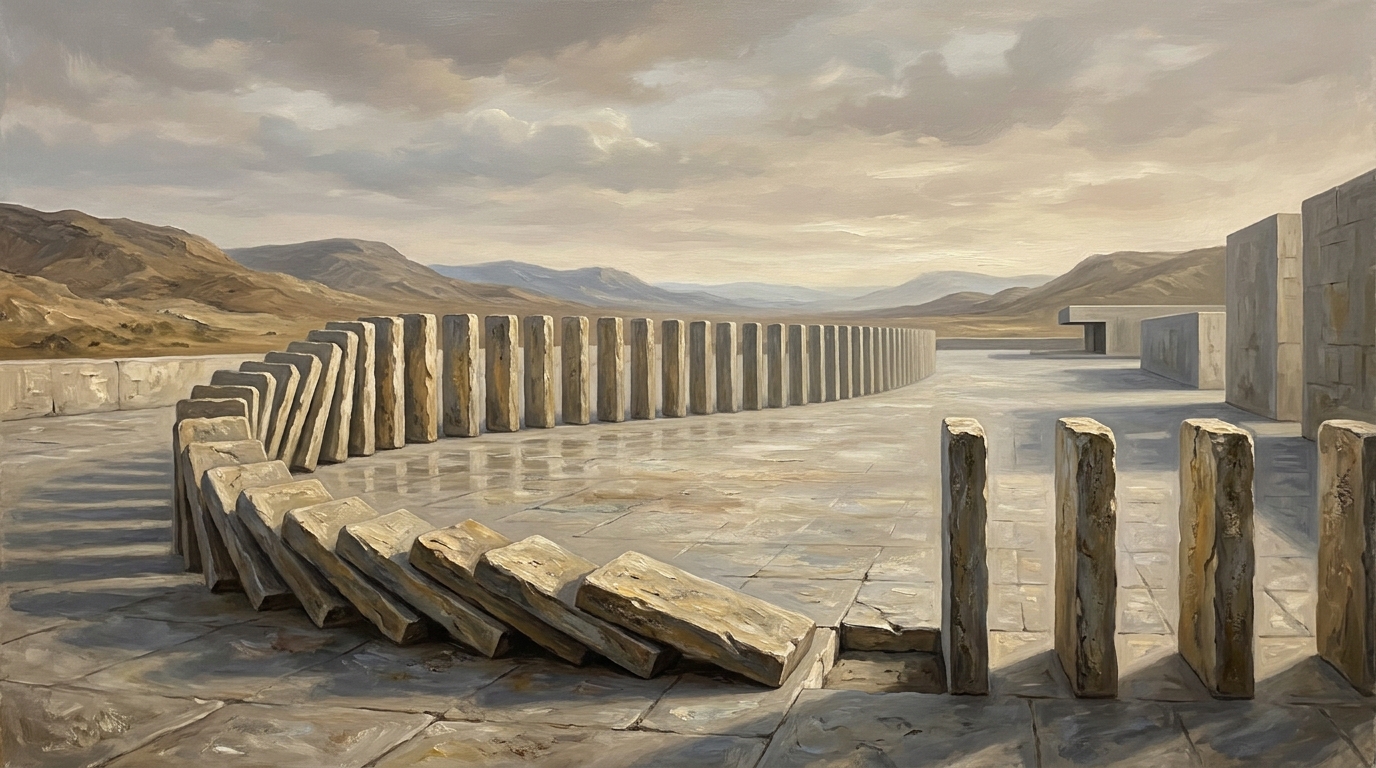
Yet in Group A, threshold 0 moves, triggering threshold 1, which provides the two participants required to activate threshold 2, cascading all the way to 100. In Group B, the pioneer acts, but because the next participants require two active peers, the signal fails to bridge the gap. The chain reaction dies at birth.
Loading diagram.
View diagram source
flowchart TD
    subgraph GroupA["Group A: Continuous Stepping Stones (100 Participants)"]
        A0["0: Acts Alone"]
        A1["1: Joins after 1"]
        A2["2: Joins after 2"]
        Adots["... Sequential cascade unfolds ..."]
        A99["99: All 100 complete"]
        A0 --> A1 --> A2 --> Adots --> A99
    end

    GroupA --> SplitNode{"Shift in Just One Person (Threshold 1→2)"}

    subgraph GroupB["Group B: Severed Stepping Stone (Halts at 1)"]
        B0["0: Acts Alone"]
        Bgap["[Threshold 1 Missing: Chain Severed]"]
        B2["2 (2 Peers Needed): 'Remains Silent'"]
        Bfreeze["3...99: Entire Cohort Frozen"]
        B0 --> Bgap
        Bgap -.->|Threshold unmet| B2
        B2 -.-> Bfreeze
    end

    SplitNode --> GroupB

    style GroupA fill:#f6ffed,stroke:#52c41a,stroke-width:1px
    style GroupB fill:#fff1f0,stroke:#cf1322,stroke-width:2px
    style SplitNode fill:#f0f5ff,stroke:#2f54eb,stroke-width:1px
Leadership in Group B concludes that ninety-nine members approved the mandate, save for one chronic troublemaker. This is an utter illusion. The remaining ninety-nine harbor identical objections, but because the domino never reached their threshold, they remained perpetually frozen.
3. The Information-Blocking Loop of Mutual Silence
Why do dissenting individuals maintain silence? To minimize career and social hazards, actors deliberately decouple their private preferences from their public persona.
This strategic concealment injects deceptive feedback into the collective system.
Loading diagram.
View diagram source
flowchart TD
    Risk["Perceived Hazards of Dissent\n(Career & Reputational Penalties)"] --> Mask["Suppression of Private Preference\n(Public Silence & Compliance)"]
    Mask --> FalseSignal["Extinction of Dissent Signals in Public\n(Manufactured Consensus)"]
    FalseSignal --> Illusion["Pluralistic Ignorance\n('Am I the only one who objects?')"]
    Illusion --> RaiseThreshold["Escalation of Behavioral Thresholds\n(Deepened Inertia)"]
    RaiseThreshold --> Mask

    style FalseSignal fill:#fff2e8,stroke:#fa541c,stroke-width:2px
    style Illusion fill:#fffbe6,stroke:#faad14,stroke-width:1px
    style Risk fill:#fff1f0,stroke:#f5222d,stroke-width:1px
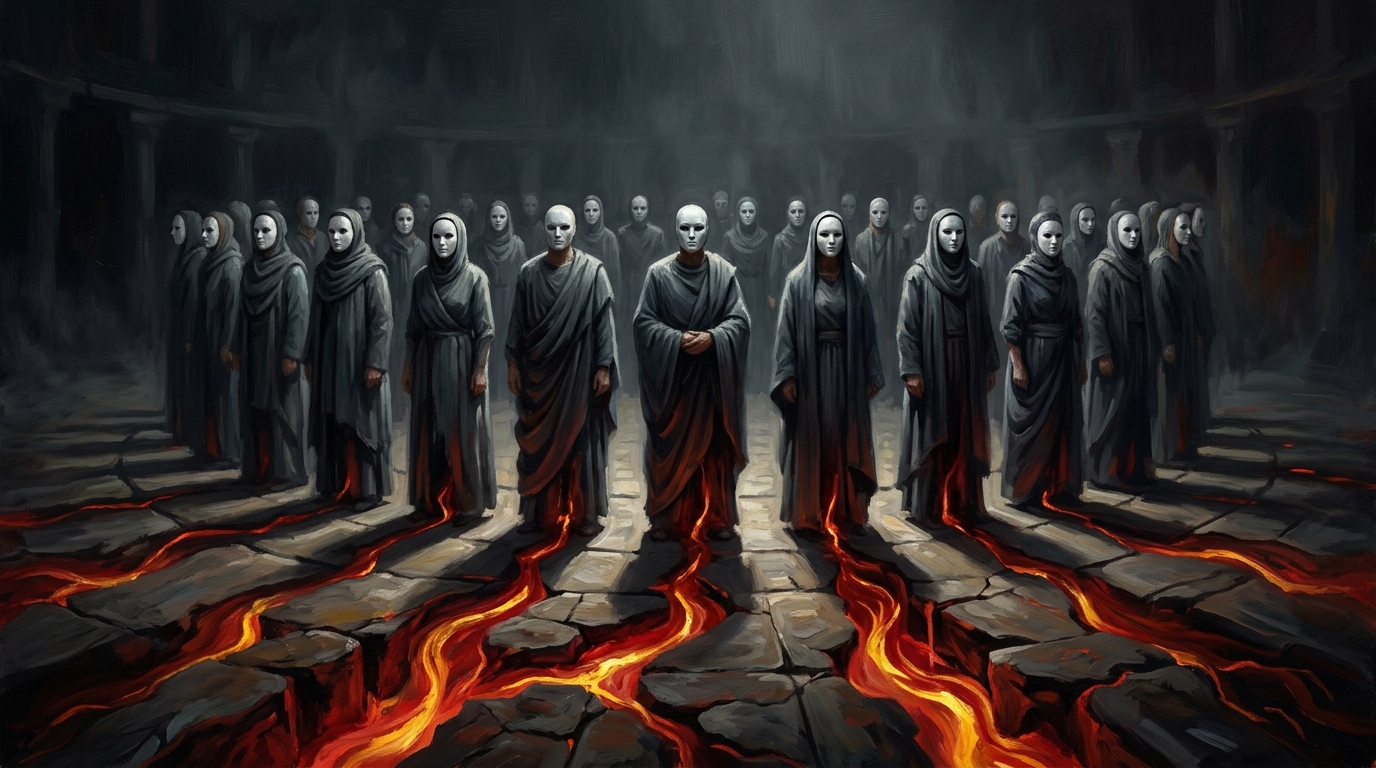
When all conceal their resistance, the room projects an aura of total harmony. Observing this manufactured peace, each individual concludes they alone find the policy flawed. The fear of social isolation further elevates individual thresholds.
Even as cumulative grievances mount, the bar for public articulation rises continuously, locking the organization into a rigid spiral of silence. This explains why authoritarian regimes and stagnant corporations collapse with breathtaking speed: the populace did not experience an overnight conversion; rather, long-suppressed convictions found an uninterrupted domino path and surfaced all at once.
4. The Dilution Effect of Expanding Networks
In a compact team, a single dissenter alters the entire atmosphere. If one person speaks out in a group of three, dissent instantly registers at 33%.
In large organizations, however, network dynamics reverse this effect. Individuals typically evaluate participation not by raw numbers, but as a proportion of their immediate peers.
In massive, sprawling institutions, isolated protests on the periphery barely register across the wider network. The visual inertia of the quiet majority dilutes initial signals, preventing individuals from reaching their requisite threshold proportion. Consequently, the larger an organization grows, the more deceptively calm its surface remains, even as institutional pressure reaches critical mass.
5. Reading the Unseen Conditions Behind Silence
Executive stillness is not evidence of consensus; it signals that the initial cost of dissent exceeds what any individual can bear.
Gauging the true health of an institution requires looking past the absence of vocal resistance and evaluating the safety of dissent:
1. Does an employee who challenges conventional wisdom incur reputational or career penalties?
2. Do structural stepping stones exist where collective insights emerge without demanding solitary heroism?
3. Does leadership recognize silence as a symptom of low psychological safety rather than genuine alignment?
Observable behavior offers only the outward posture of a crowd. The genuine dynamics governing collective action dwell within the unobserved intervals separating individual thresholds.
Silence is never proof of consent. It is merely evidence that the domino cascade has not yet arrived.
Further Questions
All Essays
The famous Zen koan "Kill the Buddha, Kill the Patriarch" is not mere anti-authoritarianism. Linji Yixuan’s radical deconstruction dismantles not only external idols, but the internal self-image and the dogma of non-attachment itself. Exploring the raft simile, Nagarjuna, and ordinary mind.

From the innocent childhood jingle of Sanwa Money to the chilling reality of a 65.7% interest rate. Exploring the 1998 deregulation, Japanese Sarakin capital, Payday loans, Wonga, and the Stiglitz-Weiss credit rationing dilemma.