Salbulsaljo: Why You Must Kill the Buddha If You Meet the Buddha
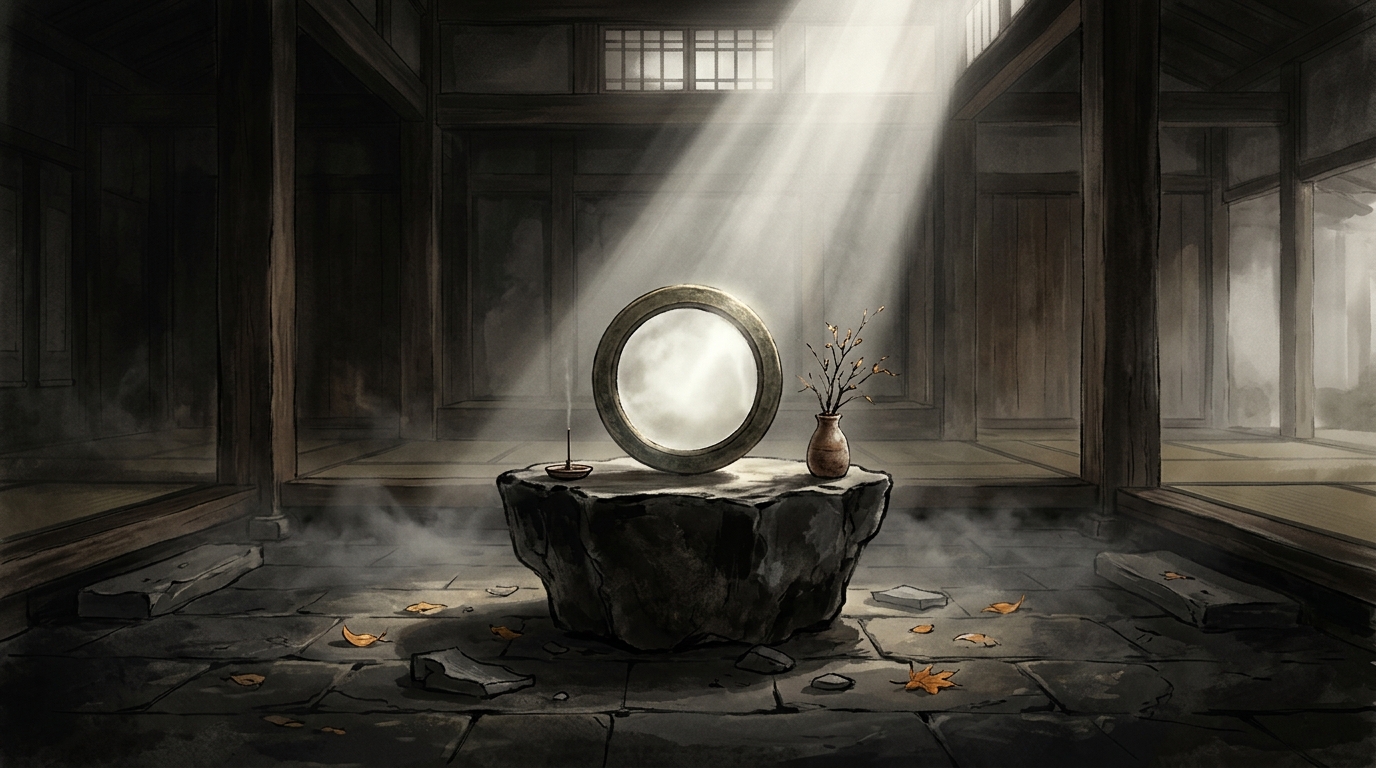
1. The Shock of the Most Radical Koan
Anyone who has crossed the threshold of Eastern thought or Zen Buddhism inevitably encounters a shocking phrase that freezes the mind in its tracks.
“If you meet the Buddha, kill the Buddha; if you meet the Patriarch, kill the Patriarch.”
In a spiritual tradition that establishes non-violence (Ahimsa) and the prohibition of killing as its foremost ethical precept, a master commands his disciples to murder the supreme enlightened teacher. Moreover, he commands them to kill the ancient patriarchal line, and even their parents and close kin, without hesitation.
Upon first hearing this jarring aphorism, modern readers typically interpret it as a poetic metaphor for non-attachment. It sounds like an intellectual declaration of independence: do not blindly follow any authority, refuse dogmatic belief, and become an autonomous thinker who relies on personal judgment. Interpreted this way, Linji’s command reads like a sophisticated, secular mantra for critical thinking.
Yet when one consults the primary text of the Linji lu (The Record of Linji), recording the teachings of the 9th-century Tang Dynasty master Linji Yixuan, and reads the full context, this comforting secular compromise falls apart. Linji’s sword does not stop at demolishing external authority. Its blade points inward, aiming directly at the most hidden fortress: the sovereign ego of the thinker who just destroyed those external idols.
Underlying Mechanism: The essence of Salbulsaljo (Kill the Buddha) is not the triumph of autonomous reason over external dogma. It is an unrelenting practice of self-negation designed to prevent the very teachers, doctrines, and tools of liberation, including the proud self-image of having attained non-attachment, from ossifying into new idols. Only when both the Buddha outside and the Buddha of the inner ego are slain does genuine, unconditioned freedom emerge.
2. The True Blade in the Source Text: Facing Inward, Facing Outward
Popular culture quotes only the eight dramatic words, but the complete passage in the Linji lu reveals the full scope of the discourse:
“Followers of the Way, if you wish to obtain insight according with the Dharma, simply do not be deceived by others. Whether facing inward or facing outward, whatever you encounter, kill it immediately! If you meet the Buddha, kill the Buddha; if you meet a patriarch, kill the patriarch; if you meet an arhat, kill the arhat; if you meet your parents, kill your parents; if you meet your kin, kill your kin. Only then will you attain liberation, and without being bound by things, walk through untrammeled and free.”
The critical hinge of the entire passage lies in the four words preceding the list of targets: “Facing inward or facing outward (向裏向外).”
Killing the external Buddha is conceptually straightforward. Throughout life, we lean on external anchors. We revere wise mentors, seek counsel from canonical texts, and rely on elegant philosophical frameworks to make sense of a chaotic world. In the early stages of learning, this is a necessary and wholesome foundation.
The danger arises when that object of learning degenerates into an unassailable object of worship. We start treating every utterance of a venerated master as infallible dogma. When messy reality contradicts the theory that once opened our eyes, we twist reality to protect the sanctity of the theory. What was originally adopted as a provisional raft to reach truth becomes an absolute idol that shields us from truth itself.
Linji’s command to kill the external Buddha is clear: it is not a call to desecrate the historical Siddhartha Gautama, but an urgent command to smash the calcified, reified concept of the Buddha enshrined in our own minds.

3. The Simile of the Raft: Carrying the Raft on Your Head
This radical insight shares identical DNA with the renowned Simile of the Raft in the early Buddhist discourse, the Alagaddupama Sutta (MN 22).
A traveler arrives at a wide, treacherous river. The near shore is perilous, while the far shore is safe. Having no bridge or ferry, he gathers branches, grass, and reeds, binds them into a sturdy raft, and paddles vigorously across to the other side. The raft was an immense benefactor that preserved his life. But what if, upon stepping onto safe ground, the traveler thinks:
“This raft has been of great service to me. I shall hoist it onto my head and carry it with me wherever I walk.”
Loading diagram.
View diagram source
flowchart LR
    A["Perilous Near Shore<br/>(Ignorance and Craving)"] -->|Construction of Raft| B["Crossing the Flood<br/>(Instrumental Reliance on Teachings)"]
    B -->|Arrival Completed| C["Safe Far Shore<br/>(Insight and Liberation)"]
    C -->|Perverted Attachment| D["Carrying Raft on Head<br/>(Dogmatization of the Vehicle)"]
    C -->|Proper Relinquishment| E["Leaving Raft at the Shore<br/>(Unburdened Freedom)"]
The Buddha asks his disciples: “Would that traveler be doing what ought to be done with the raft?” The monks reply: “Certainly not. He should beach it on the bank and move forward unburdened.” The Buddha then delivers his famous verdict:
“You should understand the Dharma as like a raft: even right teachings must be abandoned, let alone wrong teachings.”
Teachings exist for crossing over, not for grasping as personal property. Before crossing, one must cling to the raft with full strength. But once across, clinging transforms the raft from an instrument of salvation into a crushing burden. The sharp edge of Salbulsaljo strikes at precisely this moment of necessary abandonment.
4. The Internal Buddha: Placing the Ego on the Empty Throne
However, the true abyss of Linji’s teaching opens only when one turns inward: “Facing inward (向裏).”
A person who has dismantled external authorities and stepped out from the shadow of gurus often experiences intoxicating intellectual pride: “I am no longer duped by anyone. I judge everything by autonomous reason, immune to dogma.”
To all appearances, this seems like mature intellectual sovereignty. Yet right here, the most dangerous Buddha is born. On the vacant throne where external gods once sat, one has crowned a new deity: the self-satisfied, autonomous, enlightened Ego.
Dimension | External Buddha (Outer Authority) | Internal Buddha (Inner Ego) |
|---|---|---|
Form & Abode | Venerated gurus, infallible scriptures, sacred traditions | Pride in autonomous judgment, critical intellect, the noble self-image |
Attachment Mechanism | Blindly copying and obeying the opinions of others | Sanctifying the very self-consciousness of “I am non-attached” |
Pathological Consequence | Heteronomous dogmatism and sectarian rigidity | Spiritual pride, condescension toward others, paralyzed self-critique |
Application of Salbulsaljo | Leaving the raft at the shoreline without clinging | Shattering both the pride of having crossed and the identity of the judge |
The fiercer one’s resolve to remain independent, the more arrogant one becomes toward valuable criticism. The prouder one is of possessing a critical mind, the more terrifying it becomes to admit one’s own flaws. The iconoclast who laughed at priests now sits alone in his study, worshipping his own reflection as the supreme judge of the universe.
Linji refuses to tolerate this subtle self-deception. Immediately after commanding his followers to kill the Buddha, he delivers this devastating blow:
“Outside there is no Dharma to seek, and inside there is nothing to grasp (向外無法, 內亦不可得).”
When hearing that truth is not outside, people immediately scurry inward to fortify their psychological ego. Linji cuts off this retreat: there is no solid kernel inside either. When one perceives that the autonomous thinker within is itself an empty, conditional construct, all idols, both inner and outer, crumble into dust.
5. Even Emptiness Becomes Poison: Nagarjuna’s Warning
This paradox was given strict philosophical formulation by Nagarjuna, the founder of Madhyamaka philosophy, in chapter 13, verse 8 of the Mulamadhyamakakarika:
“The Victorious Ones have declared Emptiness as the relinquishing of all philosophical views. But those who turn Emptiness into a view are declared incurable.”
Sunyata (Emptiness) was taught as a medicinal purge to wash away reified views, revealing that all things exist dependently without inherent self-nature. It was never intended as an ontological theory to possess.
What happens if a poisoned patient takes an antidote, but then becomes addicted to the antidote, drinking it day and night? Ancient Indian medical texts noted that when medicine cures the original disease but remains stuck in the belly as a new toxicity, no doctor can cure it. Nagarjuna warned that those who reify Emptiness into an absolute dogmatic stance are like patients suffering from an incurable overdose of medicine.
This is why the Heart Sutra systematically negates the five aggregates and four noble truths, culminating in the precipice: “There is no wisdom and no attainment (無智亦無得).” If one clings to wisdom as personal capital or treats enlightenment as a spiritual medal, it remains indistinguishable from the vulgar pursuit of wealth and fame.
6. Turning the Blade upon Salbulsaljo Itself
Here we arrive at the most dizzying and demanding question of all.
Kill the Buddha, kill the patriarch, kill internal autonomy, do not cling. Are we not now clinging to this sublime command not to cling? Chanting the four syllables of Salbulsaljo, are we not intoxicating ourselves with intellectual euphoria, carving out yet another Buddha in our heads?
The true terror of Linji’s teaching is that the blade inevitably turns around to decapitate the doctrine of Salbulsaljo itself.
The moment one turns Salbulsaljo into an absolute slogan, one has already violated its essence. A devotee who dogmatizes Linji’s words is precisely the kind of parasite Linji despised: someone hanging from another person’s lips. True Salbulsaljo requires tossing even the koan of Salbulsaljo into the trash, standing completely exposed on the edge of the cliff with nowhere to lean.
7. Returning to Ordinary Mind: The Freedom of Ordinary Life
On the smoking ashes where every idol has been incinerated, what is left for us to do? Must we sink into cynical nihilism and reject all meaning?
Linji’s answer is disarmingly simple and serene:
“In the Buddha-Dharma, there is no place to apply effort. Just be ordinary, without contrivance (無事人): excrete, urinate, wear your clothes, eat your rice, and when tired, lie down and sleep.”
Killing the Buddha is not an act of vandalism or ascetic madness. It is the quiet surrender of spiritual ambition: the fantasy that some extraordinary breakthrough will make life complete, the pride of standing above the crowd as an enlightened elite, and the arrogance of mastering the universe with a single theory.
Once you cross the river, you simply walk on solid ground. You do not carry the raft on your head to show off, nor do you perform theatrical hysterics by burning it with an axe.
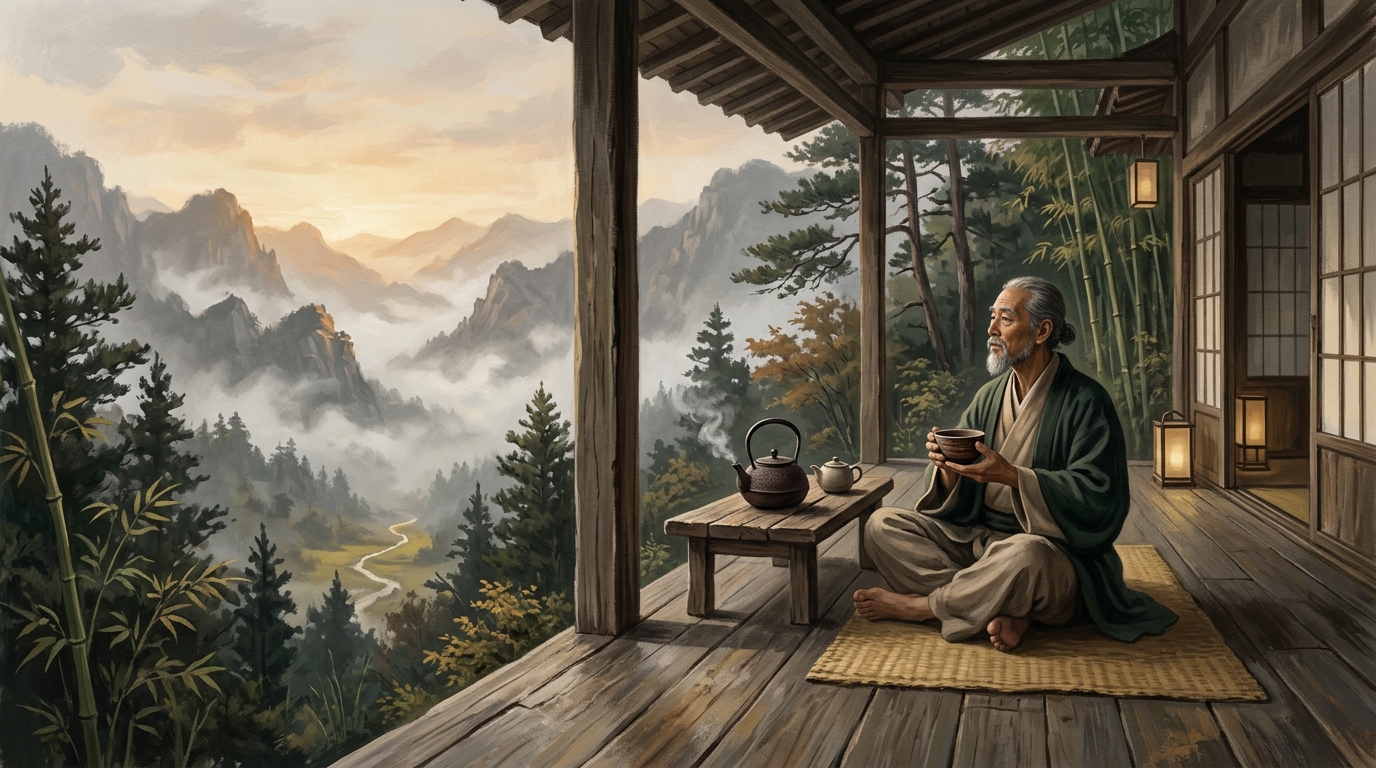
The Buddha we had to kill was never standing outside on a distant altar. It was a mirage conjured by our own anxious ego, frantically trying to prove that it knows, achieves, and possesses truth. When that mirage dissolves, we can finally face the morning sun with an unadorned, naked heart, and quietly drink our bowl of tea.
Further Questions
All Essays
In an era captivated by dark psychology and manipulation tricks, examining why true maturity lies not in controlling others, but in the quiet discipline of self-command and leading causes through Hong Zicheng’s Cai Gen Tan.

How mathematicians solved the 43 quintillion states of Rubik’s cube in 20 moves by shifting perspective. Exploring chess invariants, the Einstellung trap, and four distinct exits for navigating complex real-world problems.