Socratic Elenchus and Aporia: Why True Thinking Begins in a Dead End
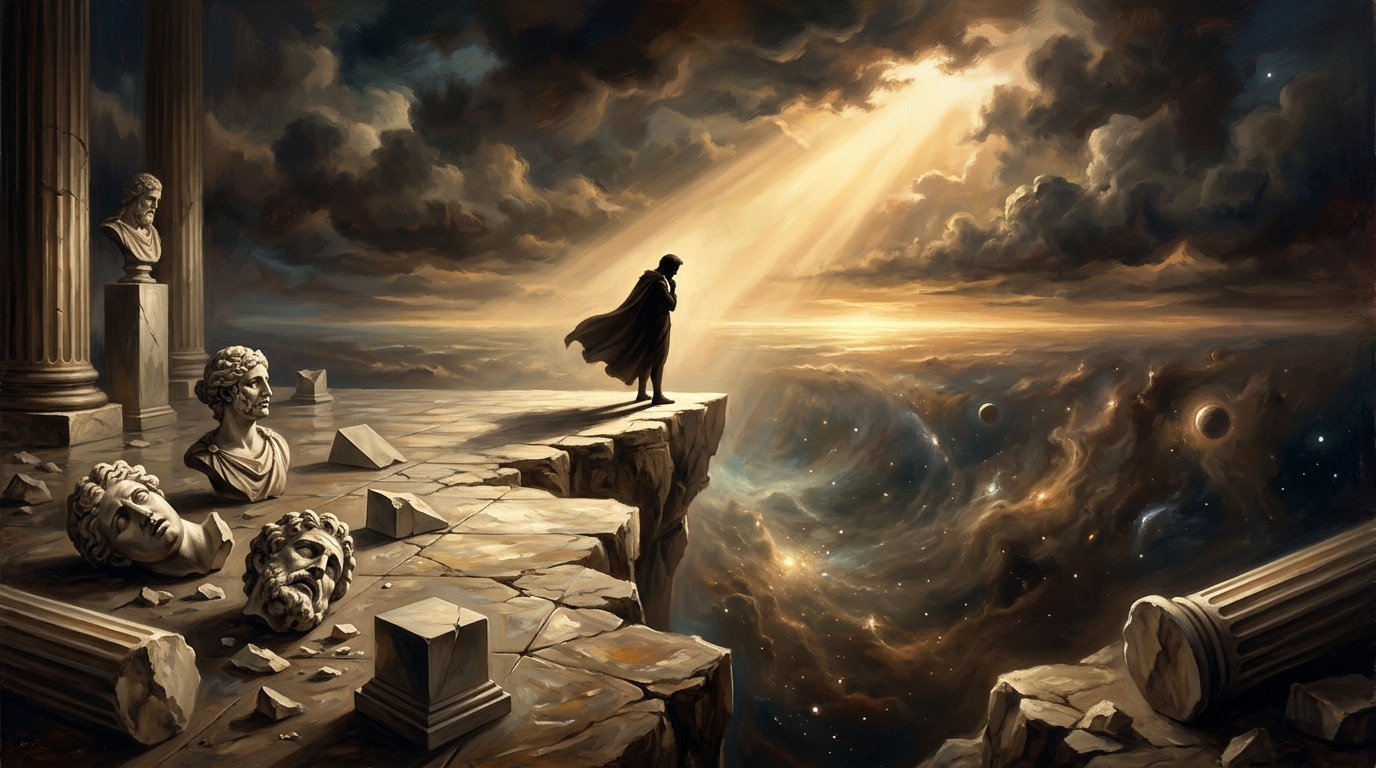
1. Certainty Before the Court and the Crumbling of Justice
In 399 BCE, before the Royal Stoa of the Archon Basileus in Athens, two men confront one another. One is the elderly Socrates, facing impending trial on capital charges of corrupting the youth and introducing novel divinities. The other is Euthyphro, a respected religious specialist arriving to prosecute his own father for murder.
Euthyphro strides with unwavering confidence. While his relatives bitterly condemn him for bringing patricidal dishonor upon the household, he remains unperturbed. He boasts that he comprehends divine ordinances and holy piety far more rigorously than ordinary men; therefore, prosecuting any murderer, even one’s own flesh and blood, represents the purest expression of holy duty.
Observing this unshakable posture, Socrates adopts his customary ironical deference: "How fortunate you are, my dear Euthyphro, to possess such flawless knowledge of the gods and the holy. Pray, instruct me: what is piety, and what is impiety?"
Euthyphro responds without hesitation: "Piety is doing what I am doing now—prosecuting anyone who commits murder or temple robbery, regardless of who they are. To leave wrongdoing unpunished is impious."
Yet Socrates gently halts him: "What I sought was not a singular instance of pious conduct among countless others. I asked for the universal form (eidos) itself, the single self-identical standard by virtue of which all pious acts are rendered pious."
Realizing he had confounded an empirical token with its constitutive essence, Euthyphro advances a second definition: "Piety is that which is loved by the gods; impiety is that which the gods hate."
Socrates reminds him that in Greek myth, the gods quarrel endlessly, harboring bitter hatreds against one another. If a given action is cherished by one deity but abhorred by another, Euthyphro’s formula leads to the fatal contradiction that the same act is simultaneously pious and impious. A flustered Euthyphro amends his premise once more, insisting that piety is what all the gods unanimously love.
At that precise juncture, Socrates drives home one of the keenest analytical wedges in the history of philosophy: Is the pious loved by the gods because it is pious, or is it pious because it is loved by the gods?
Before this dilemma, Euthyphro’s edifice implodes. If an act is loved by the gods because it is intrinsically pious, divine love is merely an external consequence or affective attribute, leaving the underlying essence of piety entirely unexplained. Conversely, if an act becomes pious merely because the gods arbitrarily favor it, morality degenerates into whimsical divine caprice, meaning slaughter and plunder could be sanctified overnight.
As the foundation of his lifelong theological dogma disintegrates into dust, Euthyphro is struck speechless. When Socrates invites him to restart the inquiry from first principles, a humiliated and bewildered Euthyphro abruptly flees, mumbling that urgent affairs summon him elsewhere.
Plato’s dialogue Euthyphro terminates abruptly without providing a single affirmative definition. The investigation has circled back to its void origin, leaving both interlocutors empty-handed.
Structural Mechanism: Socratic elenchus (refutational cross-examination) is never an apparatus for injecting external doctrine. It operates as an epistemological autoimmune mechanism that exposes internal fractures within an interlocutor’s own presuppositions. The resulting state of aporia (the loss of a traversable path) is not intellectual failure. By systematically shattering dogmatic illusion (doxa), it triggers an acute hunger for truth—an indispensable epistemic catharsis and the singular threshold for advancing toward docta ignorantia (awareness of one’s own ignorance).
2. Anatomy of Aporia: Why True Thinking Demands Losing the Way
Readers engaging with Plato’s early Socratic dialogues invariably encounter intense disorientation: almost every text closes in open frustration without resolution. Euthyphro flees before defining piety; in Laches, seasoned generals fail to capture the nature of courage and disband in silence; in Charmides, passionate inquiry into temperance dissolves into paralysis.
This state of being halted by an impassable barrier—an intellectual deadlock where every avenue of thought terminates against a wall—is known in Greek philosophy as aporia (a-poria).
The etymology illuminates its profound gravity. The privative prefix a- (without) combines with poros (pathway, passage, ford, or exit). Literally, aporia designates the condition of possessing no way through: a total cul-de-sac.
In professional negotiations or academic symposia, plunging into aporia is stigmatized as defeat. It signifies conceptual poverty, clumsy preparation, or conversational humiliation. Yet for Socrates, this dead end represents the supreme turning point where genuine contemplation is born.
In daily life, we navigate under the hypnotic presumption that our path (poros) is wide and clear. We believe we know what fairness demands, what constitutes a meaningful life, and how merit should be appraised. Executives instruct teams to act reasonably, and the public readily convenes kangaroo courts of moral judgment. So long as this certainty endures, humans never inquire. To possess an answer in one’s pocket renders further seeking an inefficient luxury.
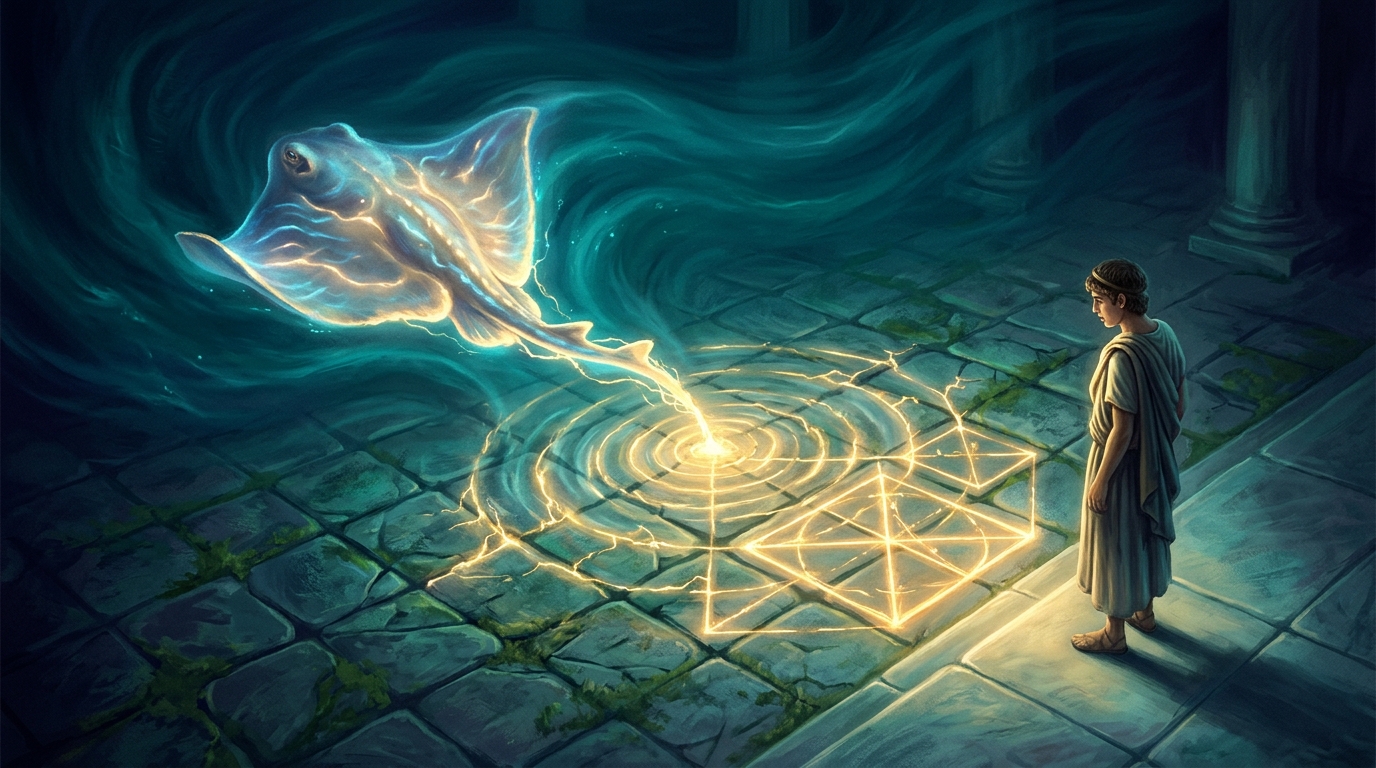
In Meno, the aristocratic general Meno, having delivered celebrated orations on virtue throughout Greece, finds his certainty pulverized within minutes of conversation with Socrates. In exasperated panic, he compares Socrates to the marine torpedo fish (electric stingray): "Socrates, both in form and in deed you resemble that flat sea fish which numbs and paralyzes anyone who touches it. My tongue and my soul are utterly torpid. I have spoken thousands of times on virtue before great crowds with immense acclaim, but now I cannot utter a single coherent word about what virtue actually is."
This cognitive paralysis articulates the true essence of aporia. The firm soil beneath one’s feet abruptly evaporates, stranding the thinker alone before a sheer precipice.
Why did Socrates deliberately drive his peers toward this agonizing vertigo? Because a soul choked with specious knowledge possesses no capacity to receive authentic truth. One cannot offer rich nourishment to someone belching from surfeit. Just as a contaminated vessel must be purged before receiving fresh spring water, the mind must undergo the nauseating shock of aporia to vomit out its unearned dogma (doxa).
Aporia is not a symptom of intellectual incompetence. It is the sacred threshold of epistemic catharsis, awakening the soul from the anesthesia of false certainty.
Analytical Category | Dogmatic Certainty (Doxa) | The Dead End (Aporia) | Philosophical Inquiry (Episteme) |
|---|---|---|---|
Cognitive Condition | Believing one knows without knowing (Double Ignorance) | Lucidly recognizing what one does not know (Awareness of Ignorance) | Pursuing principles that withstand critical cross-examination |
Internal Affect | Complacent comfort, arrogance, condescending certainty | Disorientation, intellectual paralysis, anxiety, shame | Epistemic humility, hunger for truth, focused lucidity |
Response to Inquiries | Dismisses questions as self-evident common sense | Shudders at the collapse of foundational beliefs | Re-examines foundational premises and hidden assumptions |
Trajectory of Thought | Stagnant puddle of dogmatic slumber | Purging mechanism releasing the poison of false knowledge | Endless, open-ended voyage of verified discovery |
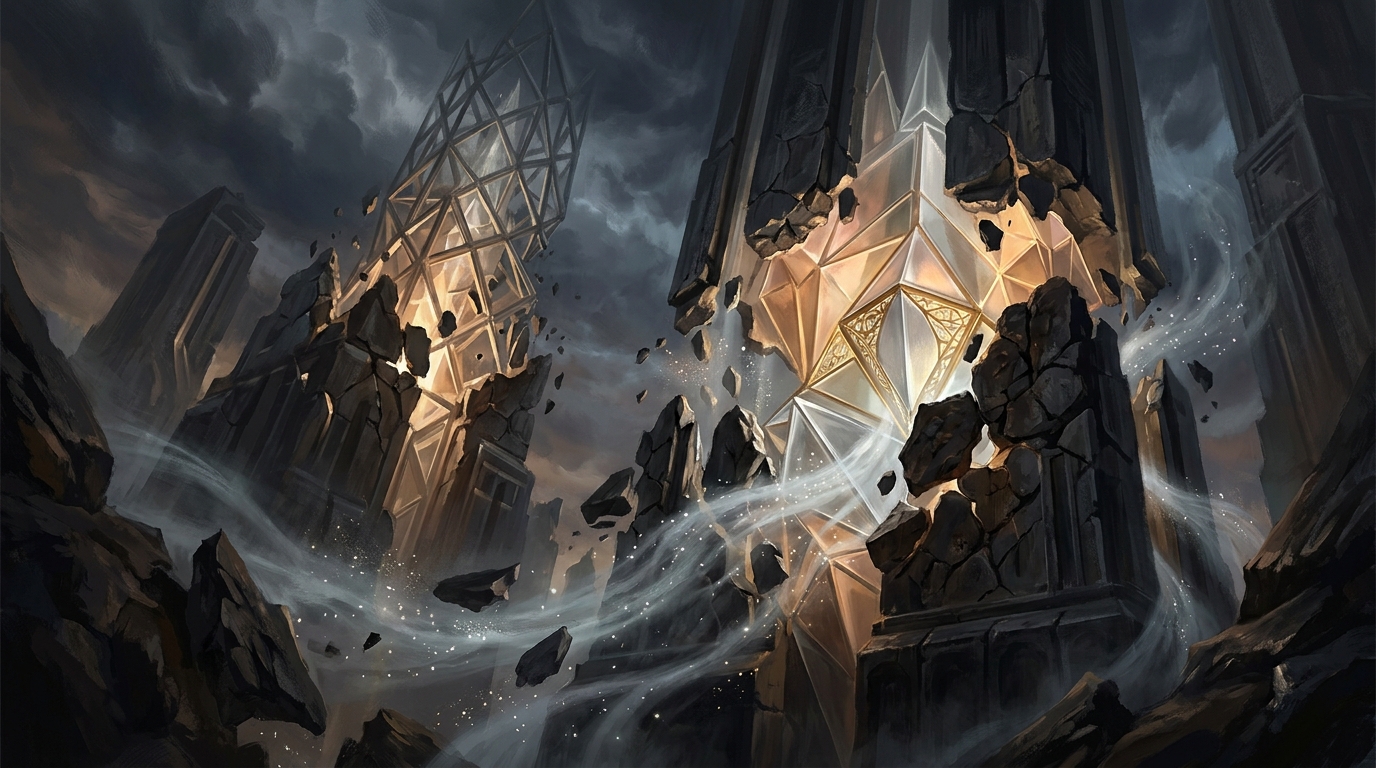
3. The Mechanics of Elenchus: Deconstruction from Within
By what exact mechanism did Socrates propel his interlocutors toward this precipice? This defines elenchus (ἔλεγχος), the ancient Greek art of testing, cross-examination, and refutation.
Elenchus does not bludgeon an opponent with external authority or superior rhetoric. It is an internal autoimmune loop wherein the interlocutor is strangled by the very threads of their own professed beliefs.
The Socratic elenchus follows four invariant structural movements:
1. Articulation of Primary Thesis (P): Socrates never initiates a positive assertion. He invites the interlocutor to proclaim their most confident conviction. (e.g., "Courage is remaining in line against the enemy without flinching.")
2. Eliciting Common-Sense Corollaries (Q and R): Socrates introduces seemingly innocuous, universally accepted premises that appear detached from the initial claim, securing the subject’s cheerful consent. (e.g., "Is courage always noble and wise? Yes. Is tactical retreat to lure the enemy into an ambush an act of military wisdom and nobility? Yes.")
3. Derivation of Contradiction (Not-P): By coupling the subsidiary premises (Q, R), Socrates demonstrates that they entail a conclusion directly negating the initial thesis: Not-P ("Retreating or maneuvering is also an act of courage").
4. Systemic Implosion and Arrival at Aporia: The primary thesis P cannot logically coexist with auxiliary beliefs Q and R. The interlocutor is forced to confess that their cognitive network harbors mutual contradiction, isolating them at the dead end of aporia.
The psychological force of this method is devastating because it eliminates all defensive excuses. Had Socrates marshaled external academic treatises, the opponent could complain of rhetorical entrapment. In the elenchus, however, every weapon was forged in the opponent’s own mouth. Watching one cherished conviction execute another, the thinker falls not to an external foe, but to an internal mutiny.
Loading diagram.
View diagram source
flowchart TD
    subgraph S1["Stage 1: Dogmatic Certainty"]
        direction TB
        P1["Interlocutor declares thesis P\n'P is absolute and immutable'"]
    end

    subgraph S2["Stage 2: Elenctic Cross-Examination"]
        direction TB
        Q1["Socrates poses common-sense questions"]
        Q2["Interlocutor grants premises Q and R\nas self-evident truths"]
        Q1 --> Q2
    end

    subgraph S3["Stage 3: Emergence of Contradiction"]
        direction TB
        C1["Synthesis of premises Q + R"]
        C2["Deduction of Not-P\n(Direct logical clash with initial thesis P)"]
        C1 --> C2
    end

    subgraph S4["Stage 4: The Dead End of Aporia"]
        direction TB
        AP1["The numbing shock of the torpedo fish\n(Speechless cognitive impasse)"]
        AP2["Epistemic catharsis:\nPurging the toxins of unearned certainty"]
        AP1 --> AP2
    end

    subgraph S5["Stage 5: The Epistemological Divergence"]
        direction TB
        D1["Flight and resentment\n'Breaking off dialogue in shame'\n(The Path of Euthyphro)"]
        D2["Birth of genuine philosophy\n'Acknowledging ignorance and seeking'\n(The Path of Socrates)"]
    end

    S1 --> S2
    S2 --> S3
    S3 --> S4
    S4 --> D1
    S4 --> D2

    classDef default fill:#18181b,stroke:#3f3f46,stroke-width:1px,color:#f4f4f5;
    classDef highlight fill:#27272a,stroke:#a1a1aa,stroke-width:1.5px,color:#fafafa;
    class S4,AP2,D2 highlight;
In Meno, Socrates stages a definitive demonstration of this process with an illiterate slave boy. Considering a square of side 2 with an area of 4, Socrates asks: "How long must the side be to produce a square of double the area, namely 8?"
Without hesitation, the boy confidently asserts: "Double the length, side 4." The boy believes he possesses the answer. Instead of rebuking him, Socrates traces a square of side 4 on the sand, revealing that its area is 16, four times the original. The boy adjusts his guess to 3, only to find that 3 squared equals 9. Overwhelmed, the boy exclaims: "By the gods, Socrates, I truly do not know!"
The boy has crossed into aporia. Socrates turns to Meno and unveils the core transformation: "Observe, Meno. At first, this boy believed he knew when he did not, speaking without fear. Now he knows that he does not know. Is he not in a far better state? Having recognized his ignorance, he is now genuinely prepared to seek the truth."
4. Does Elenchus Guarantee Truth? Coherence and the Socratic Fallacy
Yet philosophical rigor requires asking an uncomfortable question: Does exposing an interlocutor’s internal contradiction prove that Socrates has uncovered objective truth?
The answer is an unequivocal no. This illuminates the fundamental structural limit of the elenctic engine.
When beliefs P and Q clash, formal logic certifies only one verdict: P and Q cannot both be true simultaneously.
Logic alone cannot determine whether P is false, Q is false, or whether both require nuanced conditional boundaries. Uncovering a contradiction acts like a diagnostic stethoscope detecting systemic arrhythmia; it does not constitute a curative prescription.
Furthermore, a conceptual network possessing pristine internal consistency can nonetheless remain totally detached from reality. Elaborate conspiracy theories and cult ideologies maintain ironclad, seamless internal logic where every challenge is met with pre-engineered defenses. Logical coherence does not guarantee ontological truth. The elenchus can verify harmony among beliefs, but it cannot independently authenticate their correspondence with the empirical world.
In 1966, philosopher Peter Geach coined the term Socratic Fallacy to critique Socrates’ rigid epistemological demand. Geach argued that one need not articulate a universal definition of a concept to possess legitimate, functional knowledge of its instances.
Must a master painter formulate an abstract definition of beauty to recognize an exquisite harmony of form? Does a mother’s inability to deliver a philosophical treatise on justice invalidate her instinctive defense of her child? Humans navigate the world with rich tacit knowledge and calibrated instincts. Socrates was vulnerable to the charge of weaponizing formal dialectics to disarm intuitive wisdom.
Nor can we ignore the asymmetry of power between questioner and respondent. While professing complete ignorance, Socrates controlled the steering wheel of dialogue, selecting which premises to target and which corridors to close. To Athenians, this often felt less like collaborative midwiving and more like intellectual entrapment. It is hardly surprising that the polis condemned him to hemlock; the elenchus was a sacred instrument of truth, but simultaneously an incendiary weapon humiliating the ruling elite.
5. Why Defeat Surpasses Victory: The Paradox of Gorgias
Why did Socrates pursue this perilous path until his execution? The answer resonates through his astonishing declaration in Plato’s Gorgias:
"I am one of those who would gladly be refuted if I say anything untrue, and who would gladly refute another who speaks falsely; yet I hold it an even greater boon to be refuted than to refute. For it is a greater blessing to be delivered oneself from the greatest of evils—false belief—than to deliver another."
Here lies the pinnacle of Socratic philosophy. For ordinary debaters, being refuted is an intolerable disgrace. For Socrates, being refuted is receiving a life-saving surgical extraction of a malignant tumor of false certainty free of charge. Trading the fleeting vanity of winning an argument for the permanent deliverance from ignorance is an incomparable gain.
This paradox clarifies the Delphic oracle in the Apology. When Chaerephon inquired whether anyone was wiser than Socrates, Apollo replied that no human was wiser. Socrates was bewildered, knowing he possessed no special wisdom.
To test the oracle, he cross-examined revered statesmen, poets, and craftsmen. He unearthed a tragic pattern: because they possessed technical mastery in a narrow craft, they presumed they commanded supreme understanding of morality, justice, and human destiny.
Walking away, Socrates observed: "Neither of us knows anything truly noble, yet he thinks he knows when he does not, whereas I, knowing nothing, do not fancy that I do. In this small margin, then, I am wiser, because I do not imagine I know what I do not know."
This marks the foundational summit of epistemology: docta ignorantia (learned or aware ignorance).
1. Double Ignorance: Being unaware of one’s own ignorance while presuming total mastery.
2. Aware Ignorance: Standing lucidly at the boundary of what one knows and what one cannot substantiate.
Trapped in double ignorance, humans never question or grow. Only those who traverse aporia can ask the trembling, transformative first question that inaugurates wisdom.
6. The Courage to Relinquish the Illusion of Knowing
Today, we float upon a torrential ocean of instant information. A single prompt commands artificial intelligence to summarize millennia of philosophical discourse in three seconds. We arm ourselves with glib soundbites and dispense confident judgments on every complex crisis.
Yet have we grown wiser than the citizens of ancient Athens? The inverse is true: facile summaries have entrapped modern civilization in widespread double ignorance. Glancing at algorithmic synopses and declaring "I understand," we morph into modern Euthyphros parading before courthouse steps.
What our era desperately lacks is not more data, but the intellectual resolve to apply the Socratic elenchus to our own sacred cows, marching willingly toward the cliff of aporia.
• Do the common-sense principles we wield withstand internal scrutiny?
• Does our self-righteousness merely disguise tribal self-interest?
• Do we seek inquiry to uncover reality, or merely to confirm our prejudices?
• And if our dearest convictions are shattered today, can we welcome that collapse as salvation rather than disgrace?
Thinking never stirs in the complacent mouths of those who possess ready-made answers. It begins in the breathless silence where all paths terminate—at the sheer precipice of aporia, where the lost mind finally awakens to its true journey.
Further Questions
All Essays
Explore all 25 tendencies in Charlie Munger’s psychology of human misjudgment, the Lollapalooza effect, and practical ways to improve decision procedures.
How mathematicians solved the 43 quintillion states of Rubik’s cube in 20 moves by shifting perspective. Exploring chess invariants, the Einstellung trap, and four distinct exits for navigating complex real-world problems.